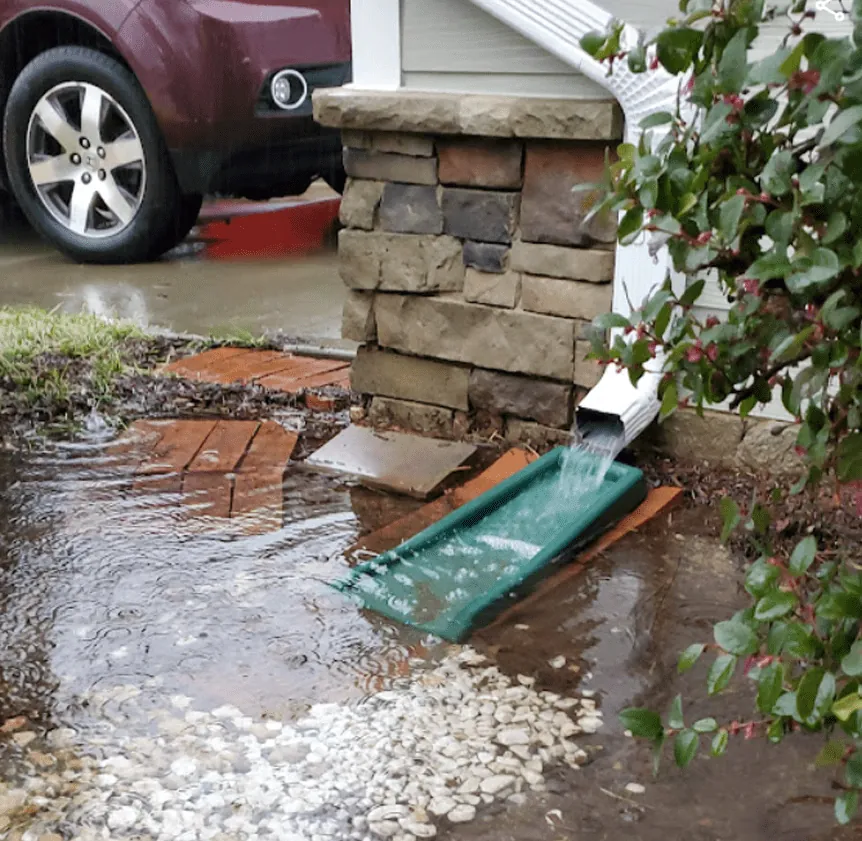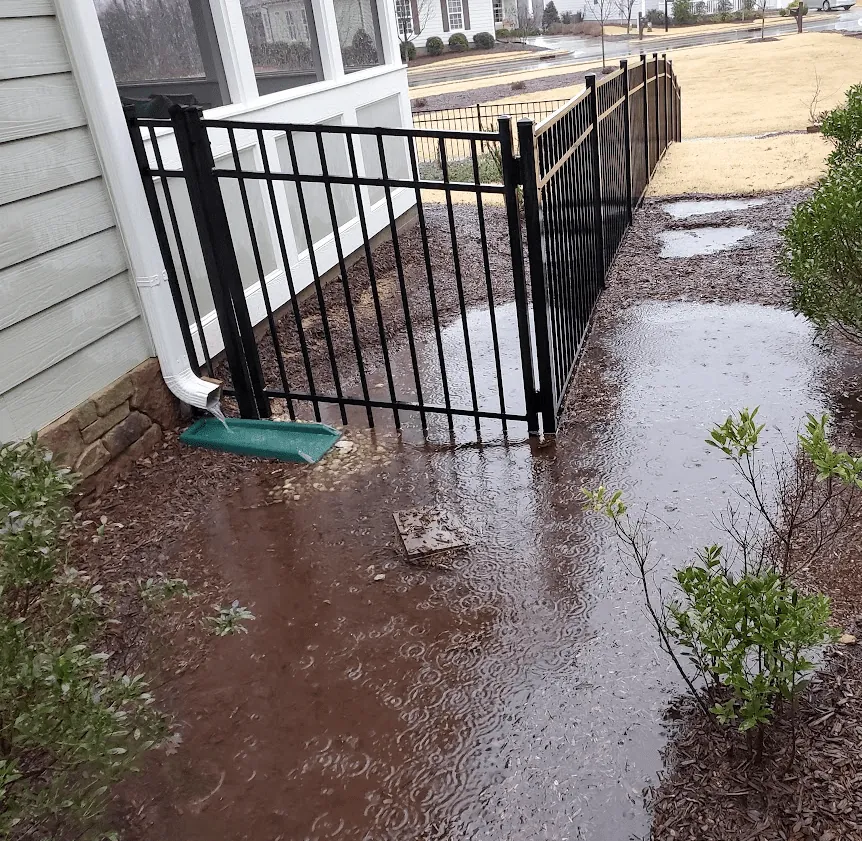
Gutter systems collect hundreds of gallons of roof water per inch of rain. The average downspout discharges about 200 gallons per inch of rain and can basically fill up about 4 rain barrels at every corner of a home in a 10-minute downpour.


Downspout Runoff
Downspouts pour an average of 250 gallons per inch of roof runoff near the foundation, often into clogged drain lines. Maintenance is key.
Downspout Drainage Systems
Managing Roof Runoff
Gutters collect hundreds of gallons of roof water per inch of rain. The average downspout puts out about 200 gallons per inch of rain. That can fill about four rain barrels at every corner of a home in a 10-minute downpour. Roof runoff from downspouts is the leading cause we see of foundation problems, including cracking, undermining, flooding, mold and leaks. Extra water around the property also attracts pests such as moles, voles, mosquitoes and large cockroaches known as water bugs.
 Gutters are generally recommended to collect rain from the roof. That water runs down the downspouts and dumps around the foundation unless a proper downspout drainage system is installed.
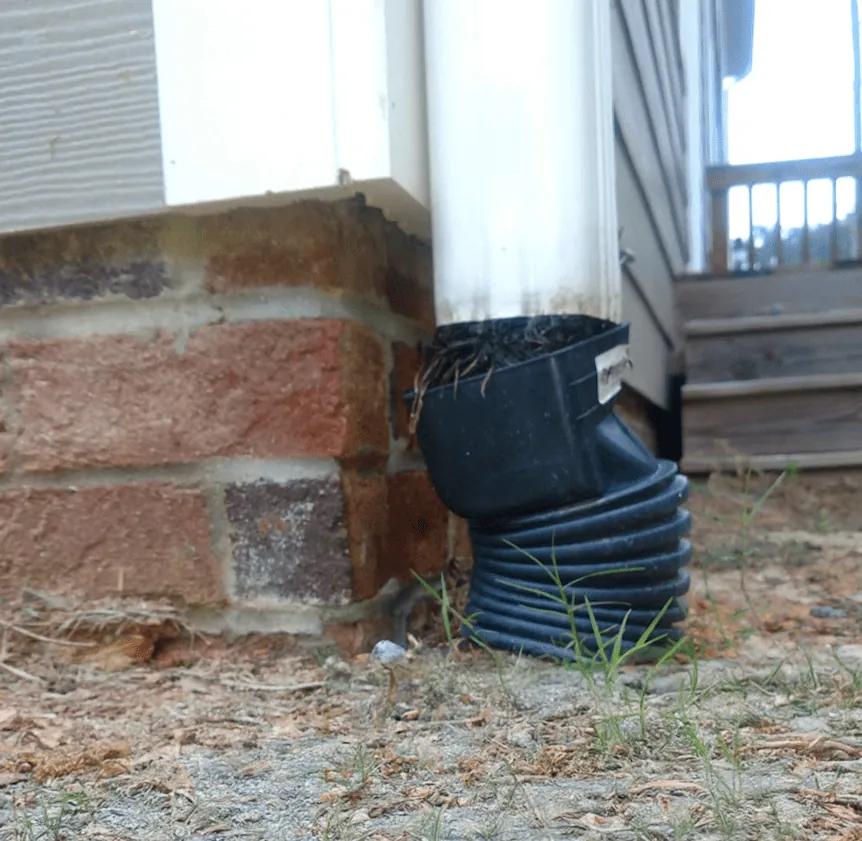
Many builders and landscapers bury corrugated pipe to carry this water away. That is only a temporary fix. Corrugated pipe is meant for temporary use above ground until a proper PVC system goes in.
Why is PVC pipe so much better than corrugated?
- A PVC drainage system basically does not depreciate. It will still work as good as new a lifetime later if properly maintained.
- PVC pipe is smooth and has a larger inside diameter, so it can carry about twice as much water as corrugated pipe, whose ridges slow the flow. Double-walled corrugated pipe exists, but its inside diameter is much smaller.
- Corrugated pipe is connected by loose, leaky fittings. These fittings not only allow water to leak out which can undermine structures.
- Ridges in corrugated pipe hold water and attract roots which get in through the loose leaky fittings. Once roots get in, leaves and other debris get caught on them and cause the pipe to clog.
- Corrugated pipe holds water in the ridges that attracts mosquitoes and encourages mosquito breeding.
- Corrugated pipes are easily crushed. Weed eaters can easily cut through them, leaving holes where they extend from the ground to the downspouts which lets downspout water leak out and cause damage to the foundation.
- Sticks and debris also catch on the ridges in corrugated pipe. Leaves pile up behind them until the pipe fills solid. In PVC pipe, debris slides right through and out the end.
- If PVC pipe ever clogs, rotary plumbing tools can clean it out. The same tools can shred corrugated pipe.
- Black corrugated pipe does not hold up well in sunlight. Where it rises out of the ground to meet a downspout, it tends to crack over time. Water then leaks out and can damage the foundation.
A proper drainage system is installed correctly using the right materials the first time. Done properly, it's a long-term investment rather than a recurring repair.
PVC Drainage System Maintenance:
PVC drainage systems require very little maintenance. We typically run water in one end and make sure it comes out the other. The biggest problem we see is that water that trickles out the end of these pipes will cause plant growth. Of course if a tree grows up at the end of the pipe, it will block the end and cause the pipe to back up eventually. We have also seen homeowners or landscapers dump debris such as lawn clippings and cover up the end of the pipes which can over time cause them to back up. That's why we recommend testing basic downspout drainage systems at least once every 2 years.
Gutter System Alternatives, Ground Guttering:
We specialize in ground guttering systems and have our own product designed specifically for this purpose.
Some homes are built without gutter systems. It is still critical to get this roof water carried away from the foundation. Ground guttering systems in the form of linear drains along the drip line of the eaves are an alternative to standard gutter systems. In wooded areas where gutters will likely be easily clogged by leaves, this can be a great alternative. Also, it can be difficult to install gutters on metal buildings. They typically need to use straps that screw into the metal roof which may not be ideal.