
Basement waterproofing FAQs
Protect your basement from water damage with expert drain installation services in North Carolina and Ohio. Contact Drain Designs today!
What are the causes of Wetness, Dampness or Flooding in Basements?

It is usually a mix of things: old or failing waterproofing, poor grading and poor drainage.
This image shows a downspout dumping near the corner of a basement. Water is coming into the basement on this corner during heavy rains. We piped the water away with PVC drains and improved the grading, Problem sufficiently solved!
 Basement waterproofing is a coating or other material that keeps water and dampness from coming through the foundation walls.
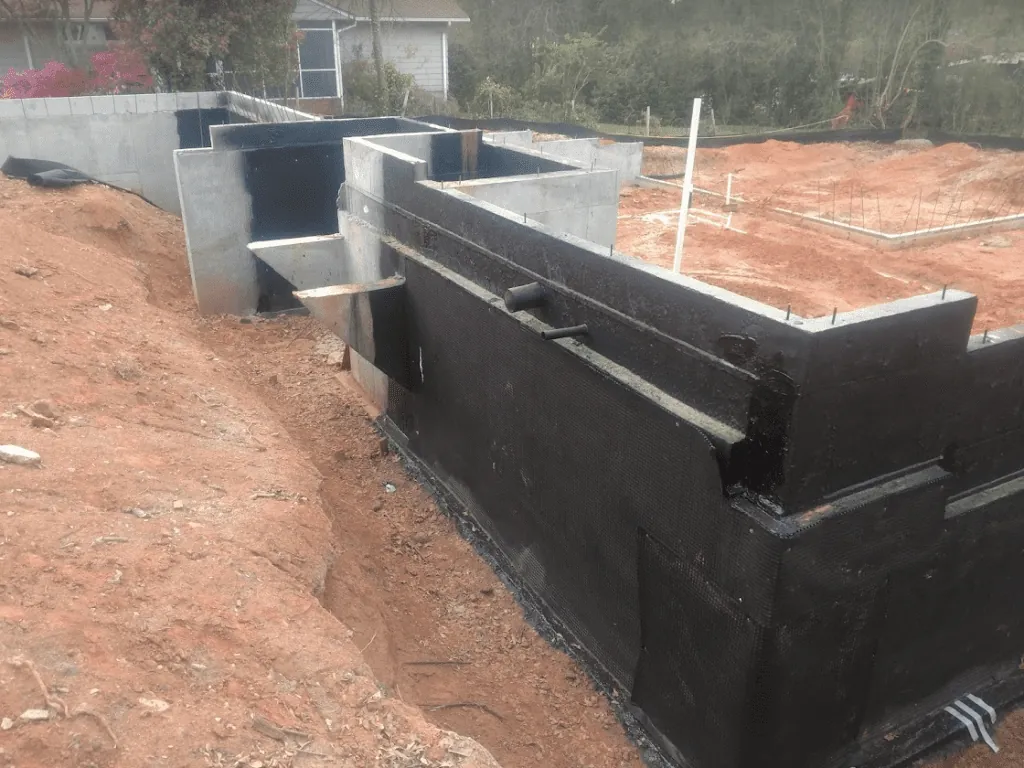
Below is an image of a foundation with a tar-type coating. For the foundation drain, the builder installed a new wafer-style drain. Builders are installing this on many new homes simply because it’s cheap. This drain cannot be accessed by a camera or cleaning tools. If it clogs or fails, the wall needs to be dug back out and the drain should be replaced with a proper PVC system.
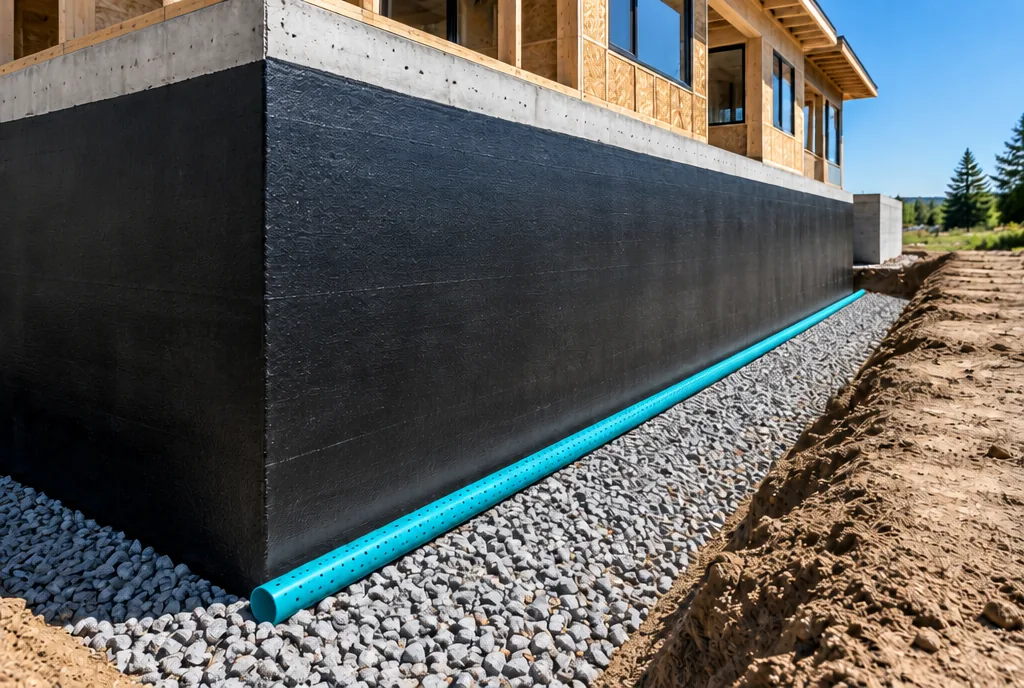
There are no second chances in waterproofing. In the photo below, a spray coating has been applied to the walls. If that waterproofing fails, the walls may need to be dug out 6 feet down to the bottom of the footing. That is why it is so important to install proper waterproofing and a foundation drain while the walls and footings are easy to reach. You really get only one chance to do it right. The coating on these walls may look good, but weather often doesn’t cooperate. Walls can be wet, icy or muddy when the “waterproofing” is sprayed, pressed or painted on. (Most building codes now call it damp proofing.)
Basement waterproofing depends on a working footer drain. This drain sits at the base of the wall, or better yet at the base of the footer. It gives water a way out so it doesn’t build up against the foundation walls. The foundation drain empties into a sump pit, where it is pumped out, or flows by gravity to a chosen outlet. In older homes, it may run to a sewer drain.
How can I keep water out of my basement and crawl space?
The key factors to keeping water out of your basement are Good Drainage and Grading along with a Good Waterproofing
System. Ideally, the ground should handle only the rain that falls on it, not the extra flow from downspouts, roofs, driveways, patios and other hard surfaces.
For Existing homes:
The best way to keep water out of a basement or crawl space is to carry roof water well away from the home. It should go to a downhill area where it can flow away without undermining trees or other structures. The average downspout puts out about 200 gallons of water per inch of rain. Routing downspouts 4 feet from the home is not enough. Moles, voles and other burrowing animals dig tunnels that can lead this water right back to the foundation. Corrugated pipe is not enough either. Roots can crush or pinch it closed. Its loose, leaky fittings, even when taped, let roots in to reach the water that sits in the pipe’s ridges. Corrugated pipe is for temporary use above ground only. Use high-grade PVC below ground. With proper maintenance, it is built for the long term.
For new homes:
Good drainage matters to a home’s health as much as a good roof. A PVC drainage system that carries water far from the home is one of the best investments you can make when you build. Premium waterproofing and a proper foundation drain matter just as much. Going back to replace these systems later can easily cost 10 times as much, so do it right the first time. With proper maintenance, a PVC drainage system can serve a home for many years.
Drain Designs uses our patented system, the American Drain. There’s nothing else on the market like this. Our system allows us to access and inspect the outside of the basement wall after it is backfilled. American drain panels provide an inch and a half of airspace between the foundation wall and the drainage panels. In other words, wet soil never even touches your basement wall. We can take the cap off and see any portion of the basement wall all the way down to the footer drain pipe. Our footer drain pipes are all PVC and easy to access for cleaning and maintenance. You can learn more at Americandrain.com.
What is the cost to replace or repair my waterproofing?
Addressing waterproofing problems can cost anywhere from a few hundred dollars to more than $50,000. For a few hundred dollars, temporary aboveground pipe can route downspouts away from the foundation, which takes care of many basement leaks. In some finished basements, the walls must be dug out to the footers and the waterproofing and foundation drains fully replaced. That can easily cost tens of thousands of dollars. The good news: a drainage specialist can often address basement and crawl space water without digging out the foundation. In some spots, waterproofing simply costs too much. To waterproof under a porch, for example, the porch may have to come off. The best approach is to move as much water away from the foundation as possible with grading and drainage. That takes the load off the foundation drain and the waterproofing.
Get your drainage assessment
Tired of standing water or worried about your foundation? A drainage system designed for your property can help prevent water damage, reduce puddles and erosion and protect your home for the long term. Request your assessment today.