
Drainage questions, answered
Straight answers on French drains, foundation drains, basement and crawlspace wetness, and what actually keeps water out.
FAQ topics
French drain FAQs
What a French drain is, how long it lasts, why corrugated pipe fails, and when the American Drain is the better answer.
Read the FAQ →Basement waterproofing FAQs
Causes of wetness, dampness or flooding in basements and crawlspaces, and how a foundation drain system addresses it.
Read the FAQ →What the answers look like on a real job


Common drainage questions
Short answers to the questions homeowners ask most, with a link to the full explanation on each service page.
What is a French drain?
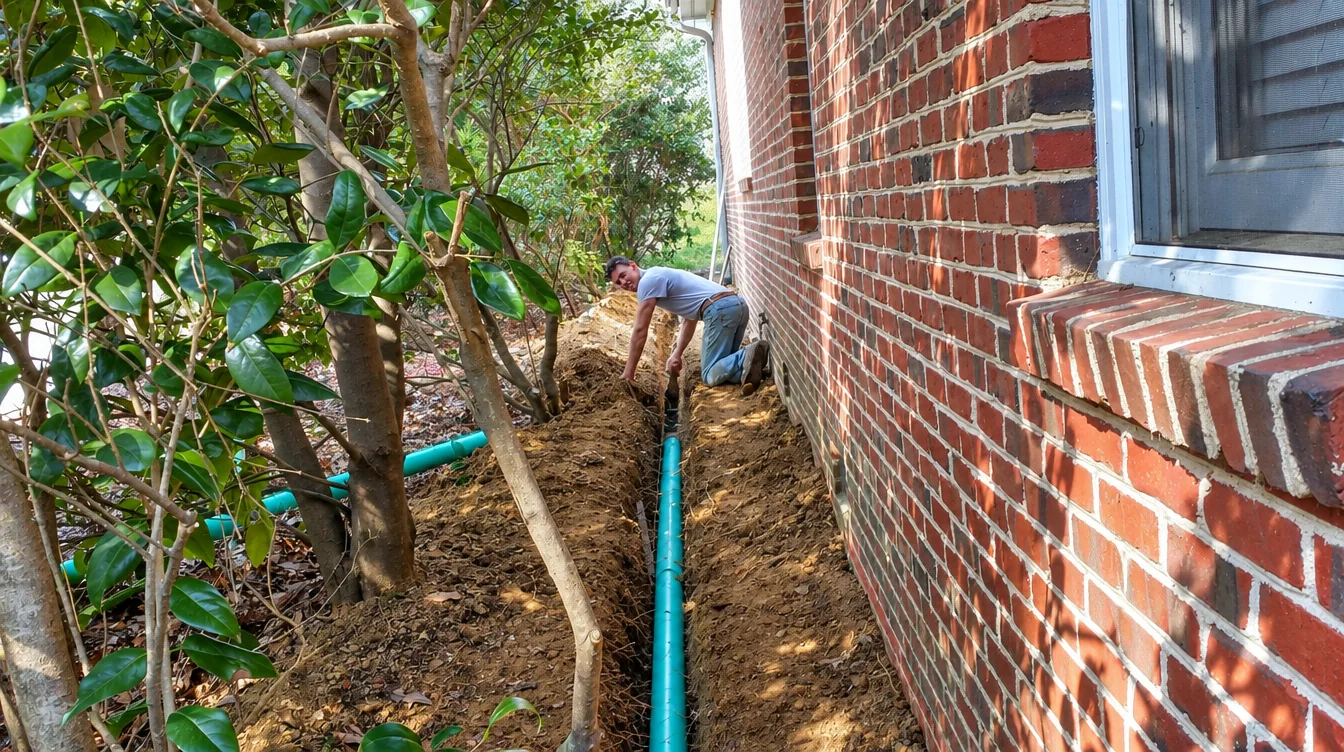
A French drain is a trench with perforated pipe and washed stone. It collects water from the soil and carries it to a chosen outlet, away from lawns, crawl spaces and foundations. It is named after Henry French, an American, not the country.
More on French drains →Is a French drain the best solution for a wet, muddy yard?
Most of the time, no. French drains work well on flat areas and along foundations, but standing water in a yard usually comes from a low spot that receives too much water from somewhere else, most often the downspouts.
More on French drains →How do I clean or maintain my French drain?
Every drainage system needs some maintenance. A well-built French drain has an easy-access cleanout at its high end. Run water into it and you should see it come out the outlet.
More on French drains →How deep should a French drain be in clay soil?
In clay, a French drain often needs to be more than 2 feet deep to be effective. Shallow drains only dry the soil within a couple of feet of the trench.
More on French drains →Do I need a French drain or an American Drain?
It depends on your soil, water volume and discharge options. Many designs pair American Drains in critical zones with underground downspout piping and grading improvements. An on-site assessment confirms which system, or combination, fits your property.
More on French drains →How does poor drainage actually damage my foundation?
Extra water soaks the soil around your home and pushes against basement walls. Over time, that pressure can crack, shift and weaken the foundation. That is why drainage matters so much for foundation health.
More on Foundation Damage Prevention →How do I know if I need basement waterproofing solutions?
Warning signs include damp walls, musty odors, white powder on walls (efflorescence), cracks, water stains and pooling water. If you see any of these, a professional assessment can show what to do next.
More on Basement Waterproofing Solutions →What causes wetness, dampness or flooding in basements?
It is usually a mix of things: old or failing waterproofing, poor grading and poor drainage.
More on Basement waterproofing FAQs →Get your drainage assessment
Tired of standing water or worried about your foundation? A drainage system designed for your property can help prevent water damage, reduce puddles and erosion and protect your home for the long term. Request your assessment today.