
French drain FAQs
What is a French Drain? A French drain is a type of trench filled with gravel or rock that redirects surface water and ground water away from an area to…
What is a French Drain?
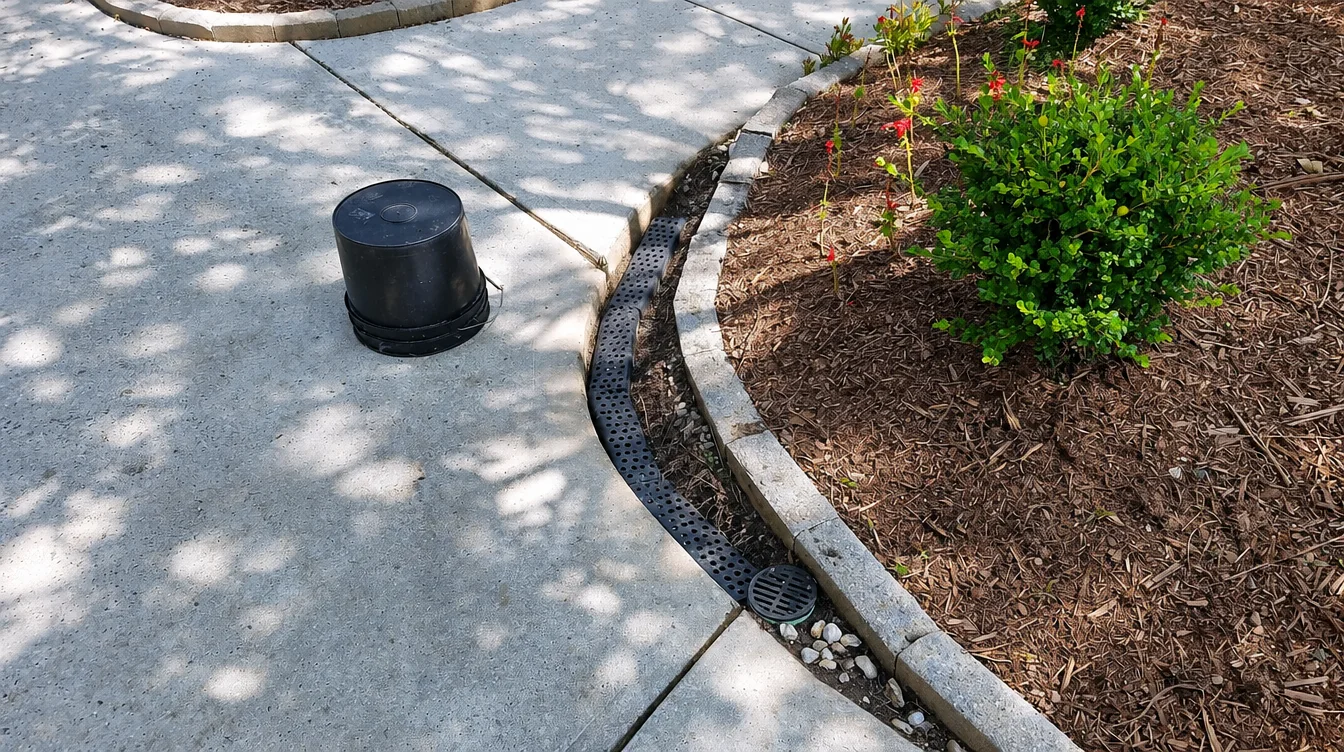
A French drain is a type of trench filled with gravel or rock that redirects surface water and ground water away from an area to prevent flooding or water damage. The trench is typically lined with landscaping fabric to prevent clogging, and the gravel allows water to filter through and be carried away from the area. French drains are commonly used in landscaping and construction to manage water flow and protect structures from water damage.
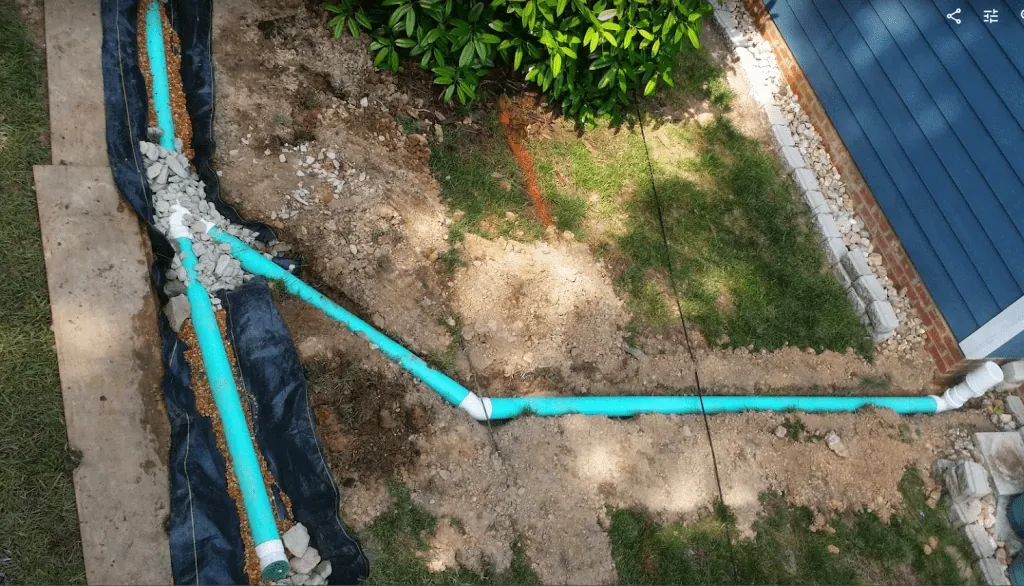
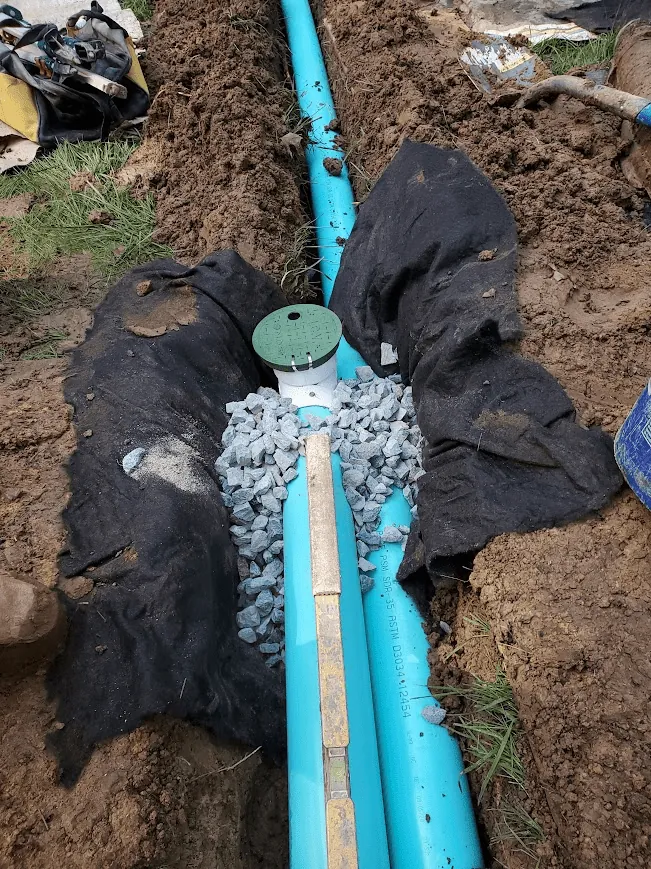
In the photo below, PVC pipe is used for a French drain with commercial grade Filter Fabric. The pipe has two rows of holes drilled A third of the way up the pipe. This allows water to flow through the bottom third of the pipe out to a desired location without leaking back out into the soil.
How long do French drains last?
French drains made with corrugated pipe may not work, and they can even make the ground wetter soon after they go in. Most French drains use slotted corrugated pipe. It holds water in its ridges and lets water leak out the bottom into the soil. That keeps the ground soaked and attracts roots. French drains are also usually covered with soil or sod, which slows water from getting in.
Are there better alternatives to French drains?
American Drains are the better alternative to French drains. They basically use plastic panels separated by spacers to form a
structural trench that sits on a PVC pipe with a trough in the bottom to prevent water from seeping back out of the pipe. They also have a perforated top drain cap to allow water to flow straight into the top of the drain. For more information visit americandrain.com.
Is a French drain the best solution for my wet, muddy yard?
Most of the time, the answer is no. French drains can be a great tool for a flat area or around the base of a home’s foundation or a wall. But standing water in a yard is usually the result of a low spot, often caused by too much water being directed into that area. Finding the source of the water, collecting it and directing it to a desired location is often the best first step. Drainage is a process. On many homes, downspouts dump hundreds or even thousands of gallons of water that collect at a low point in the yard. Managing that water often gives you more for your money than a French drain. It can address the wet yard and protect the health of the home at the same time.
How do I clean or maintain my French drain?
All Drainage Systems require some maintenance. French drains should have an easy access clean out at the top/ high end of the system. When properly installed, you should be able to run water in one end and see it come out the other. This is true with PVC pipe systems with a trough in the bottom third of the pipe. The trough portion allows water that goes in to flow out of the outlet.
Corrugated systems often take in hundreds of gallons with little or no water coming out the outlet. We always recommend replacing corrugated systems with PVC. Corrugated pipe is known to fail, and it often doesn’t work well from the start. The extra water it leaves in the soil can undermine trees and structures. At the least, it keeps the ground wet in the very areas it is supposed to dry out.
What is the cost of a French drain?
Many factors affect the cost of a French drain. French drains can average around $100 per foot. Factors that can significantly affect the cost of a French drain are the depth and length of the drain, the location of the drain and the ease of access to the location.
In other words a French drain near the driveway may be half the cost of one that is installed 200 yards from truck parking. A French drain that is 2 ft deep may be three times as expensive as a 12-in deep French drain. A deeper French drain may mean that there is lots of dirt that needs to be hauled away which also affects price.
How do I find the best French drain contractors near me?
Look for a company that specializes in drainage and French drains and has great reviews. Landscapers and other contractors often install French drains without understanding how water moves underground. A drainage specialist has years of experience digging and installing systems in wet, saturated soil. Some parts of the job are not intuitive. In clay soil, for example, a French drain often needs to be more than 2 feet deep to work. A shallow drain dries out only a couple of feet on each side, while a drain at the right depth can dry out a whole yard.
Does Drain Designs install French drains?
Yes, Drain Designs installs the best French drains available, designed for the long term with proper maintenance. We also install warranty-backed American Drains which are far more effective as well as easier to test and maintain. You can literally take the cap off of the American drain and look straight down to see the pipe. You can see the water coming in through the perforated panels. When you run water into one end of the system, water comes out the other end, with proper maintenance.
The photos below show the difference between a traditional French drain (Left) and an American Drain (right). Like the French drain, the American drain is nearly invisible when it is embedded in the grass. The American drain allows water to easily filter through the top And through the perforated side panels. The American drain can be easily accessed for inspection, testing or cleaning by removing the top cap.
Images of a French Drains


Get your drainage assessment
Tired of standing water or worried about your foundation? A drainage system designed for your property can help prevent water damage, reduce puddles and erosion and protect your home for the long term. Request your assessment today.