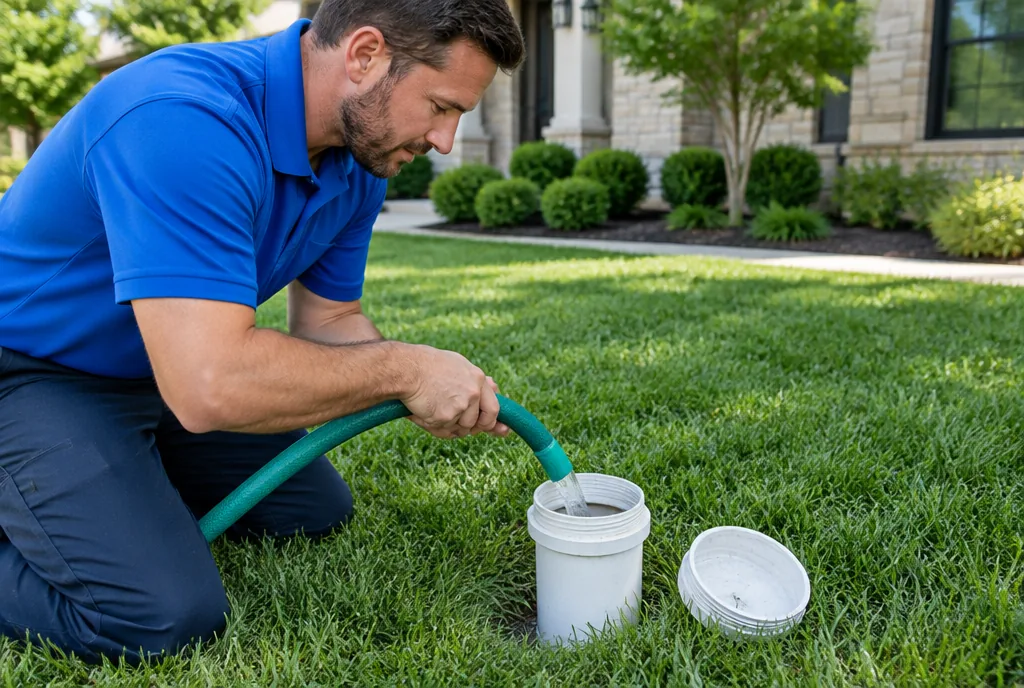
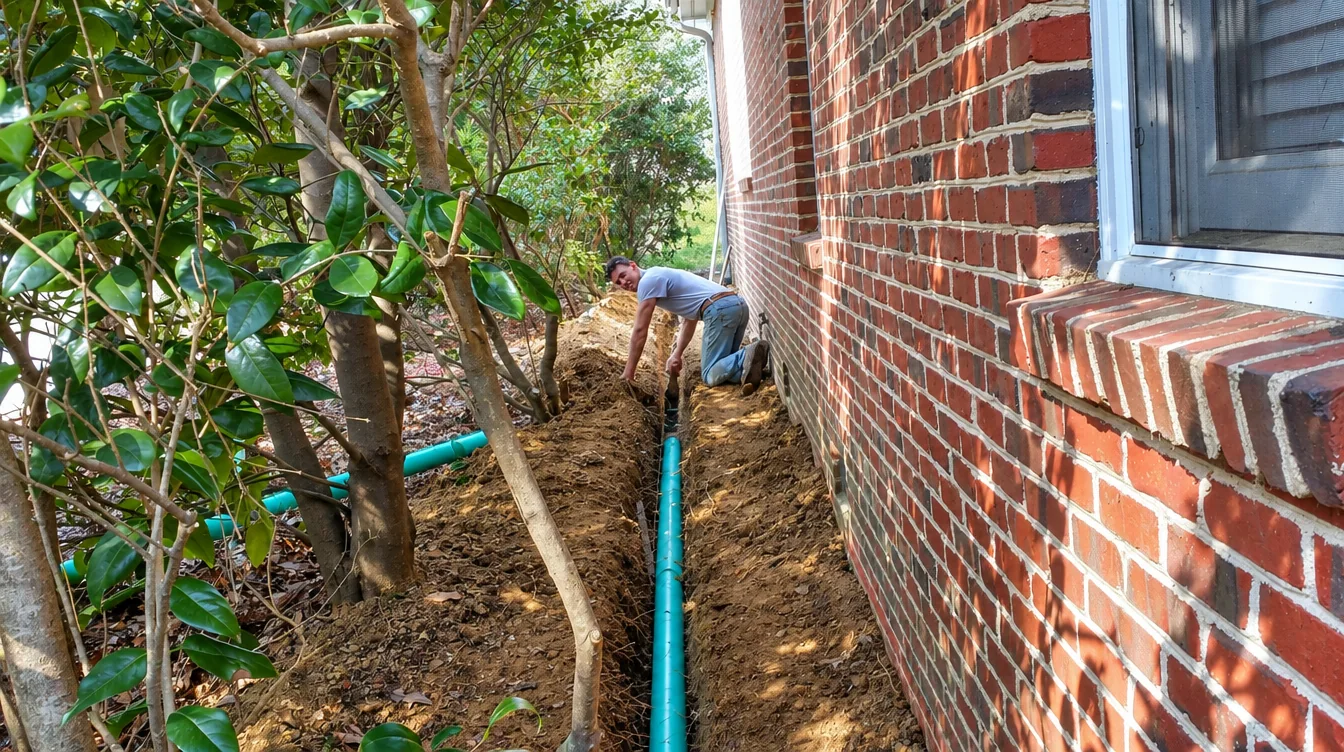
Many homeowners with a cracking foundation are told they need helical piers. In my experience, water in the soil is often the cause, so drainage is the first thing to check. Piers have their place, and this article covers when.
By Kevin Kondas, founder of Drain Designs. In four decades of masonry, waterproofing and drainage work, I have met many homeowners who were told they needed helical piers. On many of those homes I found drainage problems behind the cracks. Addressing the water is often the first step, and sometimes the only one needed.
I have also heard from homeowners who paid for piers and still saw cracks reopen. Sealing a crack does not address what is moving the soil.
Why your foundation moves
Think of your foundation as a boat, especially if your home sits on expansive clay. The ground beneath it rises and falls with moisture as the soil swells and shrinks through the seasons.
Clay is made of tiny, flat particles stacked in layers. When it gets wet, water is pulled in between those layers and the soil swells. When it dries, it shrinks and cracks. You have seen this in sun-baked clay that splits open in dry weather.
Going from very wet to very dry, expansive clay can move an inch or more. That movement pushes against foundations, and it is behind most of the cracking I see. It is also why controlling water around a home matters so much.
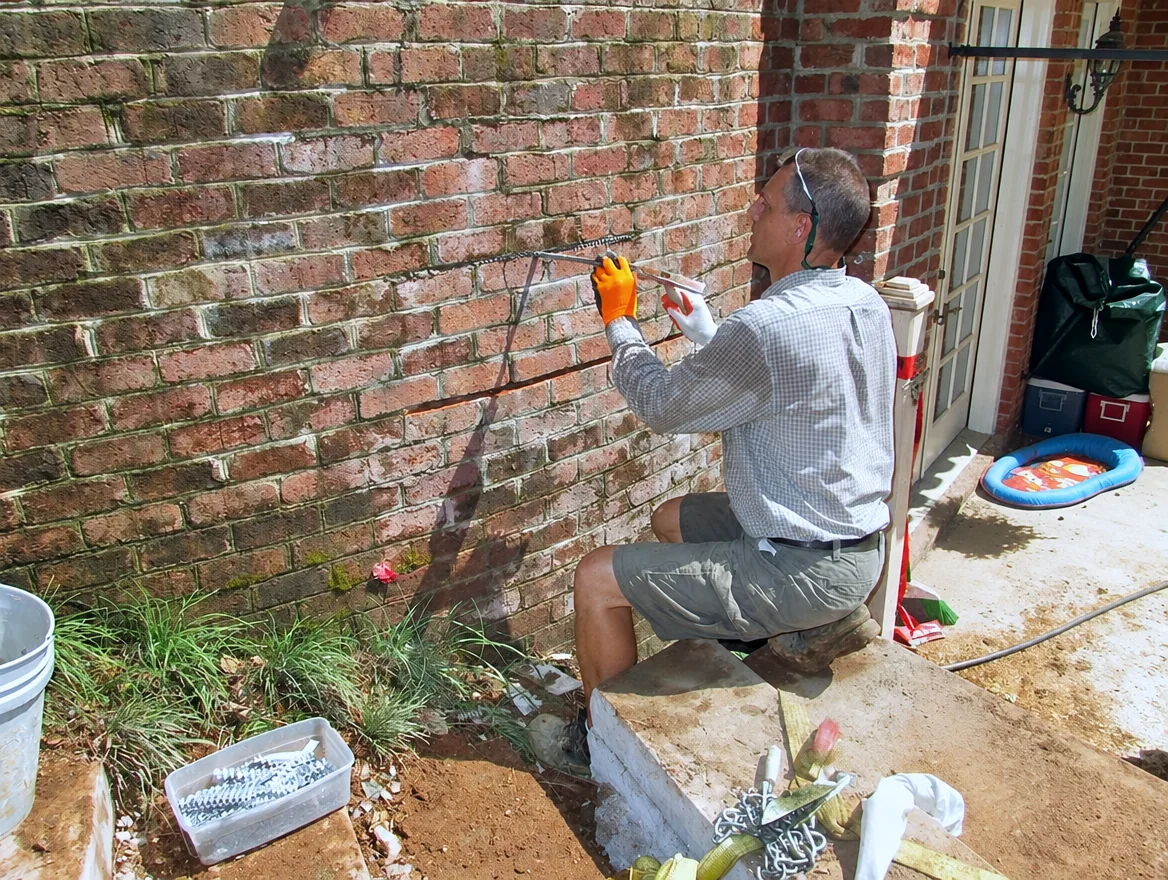
What this looks like in real homes
- Drought, then heavy rain. In parts of Texas with expansive clay, soil can shrink so far from a house that you can slide a hand between the foundation wall and the backfill. Engineers there sometimes recommend watering the foundation in a drought. The lesson is that even moisture leads to even movement.
- AC drip lines. In North Carolina we often find cracking near air conditioner drip lines. In hot, dry months the surrounding clay shrinks while the soil at the drip stays wet and swollen. That uneven movement stresses the foundation.
- Cracks that close on their own. I have inspected foundations in the dry season with cracks half an inch wide that closed back up in the wet season.
One piece of good news: many newer homes have steel rebar in their footings. If a footing cracks, the steel usually keeps it from separating.
The limits of helical piers
When piers are installed under only part of a foundation, the rest of the house still rises and settles with the clay while the pinned sections cannot. In a dry season, the house can be pulled in two directions.
If cracking continues, the usual answer is more piers. But piers around the perimeter do not hold up the interior. Interior supports can still sink if water collects under a basement floor or slab, or around supports in a crawl space.
In my experience, a typical 4-inch concrete slab can span only about 8 feet before it begins to crack without support. Stabilizing a slab home with piers alone would mean piers across the interior too. That gets expensive, and the water is still there.
Piers or drainage first?
Look at drainage first when
- Cracks are under a quarter inch
- Cracks open in dry weather and close in wet weather
- Cracking is near a downspout, AC drip line or low, wet corner
- Water stands near the foundation after rain
Piers can be the right tool when
- Part of the foundation is breaking away, such as a low corner pulling from the house
- The home sits on a steep slope that may shift
- A chimney is leaning away from the house
Homes are not designed to need helical piers. Most are not built with strong drainage systems either. Building codes set minimum drainage requirements, and builders get little guidance beyond them. Standard homeowners policies also generally exclude damage from groundwater, so check your own policy.
What to do if you see cracks
Quick crack check
Pick the description that matches what you see.
Start by documenting the crack and having the drainage looked at. With water managed around the home, the soil tends to settle down, and small cracks often stop changing.
- Document the cracks. Take dated photos of each one with a tape measure or coin for scale, and compare them over time. You can caulk and paint small cracks for looks and to keep water out.
- Address the drainage. Once water is managed around the home, the soil stabilizes. In my experience, cracks typically stop changing.
- Reinforce if needed. Where repair is needed, reinforcing the foundation with rebar and concrete can be a practical alternative to piers. A qualified professional should make that call.
If cracks are wider than a quarter inch, keep growing, or show one side shifting out of line with the other, have the foundation evaluated by a structural engineer before deciding on a repair.
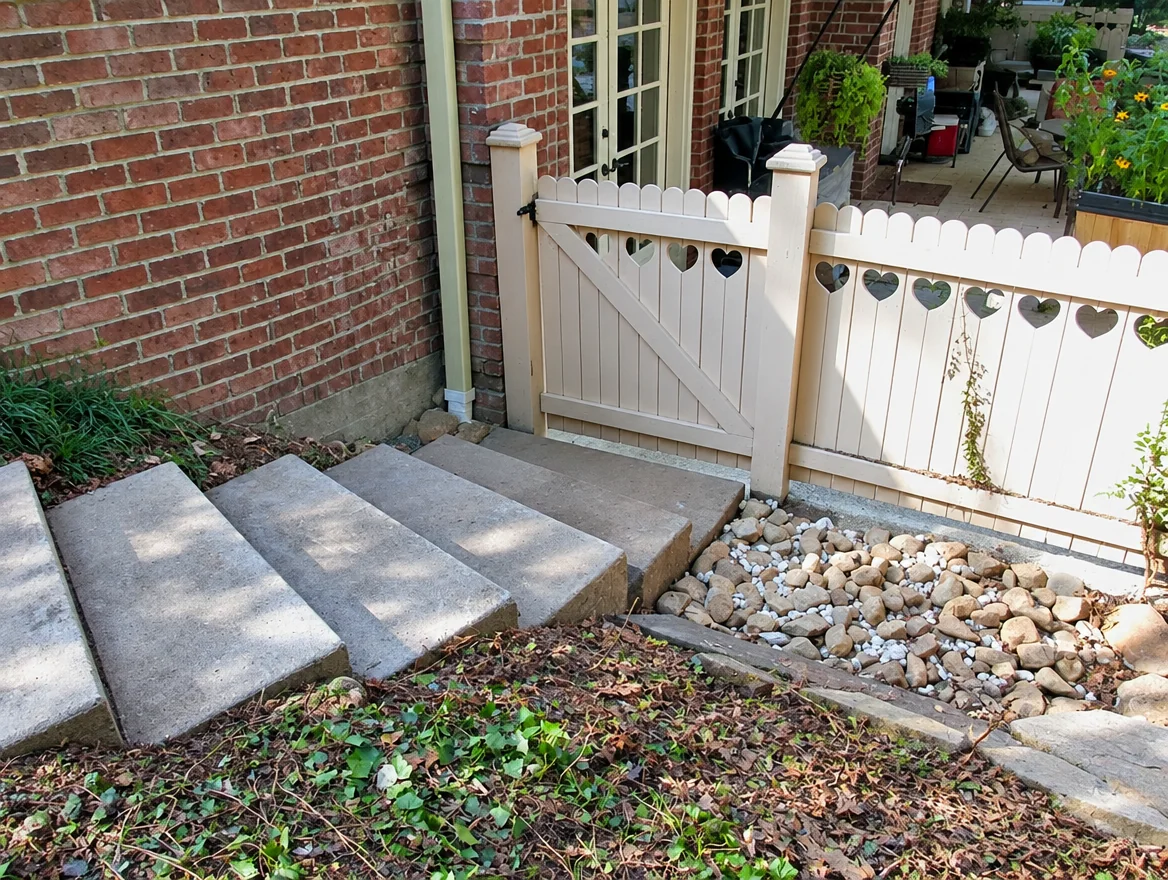
The bonus of better drainage
Poor drainage can cause foundation problems or make them worse. Improving it helps with more than the foundation. It also helps with moisture and mold, pests, erosion and mud, and struggling landscaping. The whole property becomes easier to maintain.
Before you commit to helical piers, make sure someone has looked at where the water is going. Request a drainage assessment from your local Drain Designs team, or read more about foundation damage prevention.
This article shares field experience and is not engineering advice for your home.