
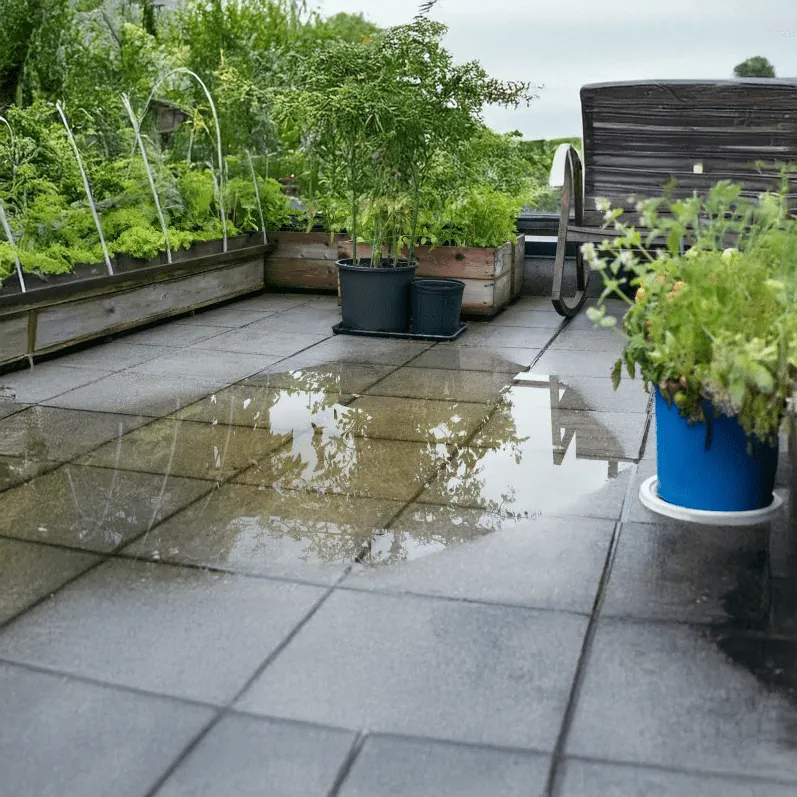
Driveways are meant to crack along control cuts. These saw cuts, or control joints, are the lines in a concrete driveway that allow it to move. Concrete 4 to 5 inches thick isn’t strong enough to span more than 8 feet, especially over wet, unstable base soil.


Patio Flooding
Water pooling around patios, retaining walls and other structures causes settling and unevenness.
Driveways are meant to crack along control cuts. These saw cuts, or control joints, are the lines in a concrete driveway that allow it to move. Concrete 4 to 5 inches thick isn’t strong enough to span more than 8 feet, especially over wet, unstable base soil. Poor drainage can ruin a driveway over time, and the damage often costs far more than the drainage system that could have prevented it.


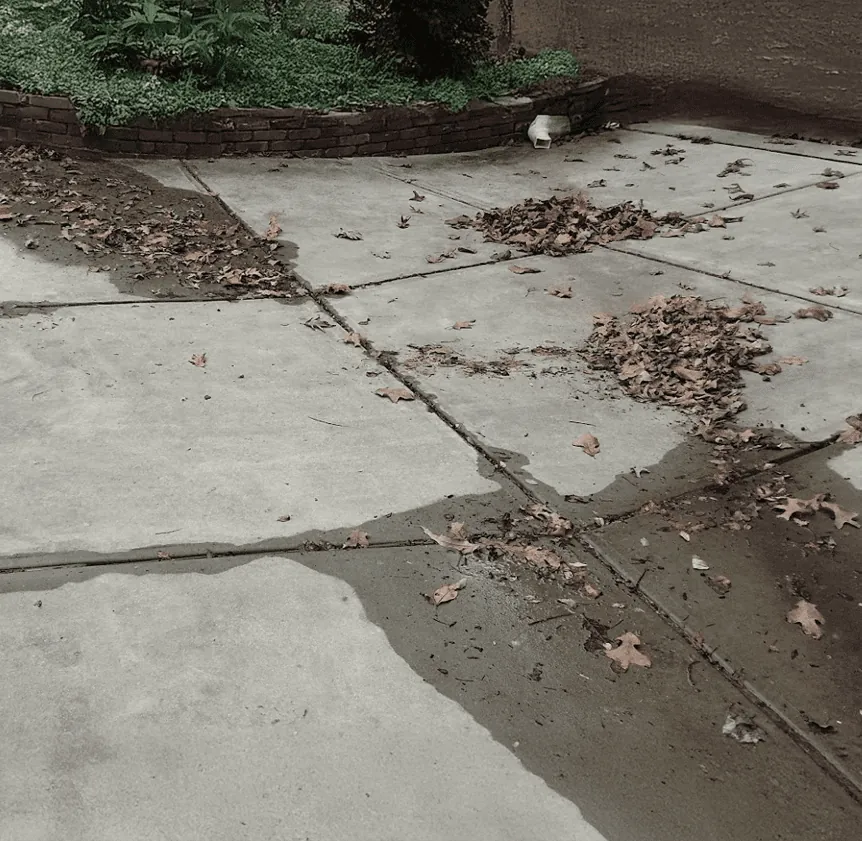
Typically, gravel is used to level out the base of the driveway. If downspouts dump near the driveway, water can flow through the gravel under the driveway and cause undermining and soft, unstable base soil.
Every 10-by-10-foot section of driveway sheds more than 62 gallons of water in 1 inch of rain. As that water runs down the driveway, it can flow into control joints and other cracks and undermine the slab. We often run a hose on a driveway and watch the water disappear into a crack in the middle, then come out several yards away.
Downspouts flowing on top of the driveway can contribute to this issue. They can also flow off the side of the driveway, eroding around the edge and/ or filling up voids in the gravel below the concrete.
Driveways that slope toward the home can also cause drainage problems, so proper drains are needed to carry runoff away from the home and yard. These driveways usually have a swale, a dip where the concrete slopes down from the garage before rising again. A surface drain can often catch the water in this swale and carry it through PVC pipe to a safe area where it won’t damage the yard, home or other structures.
See our page about Trough drains, Channel drains and linear drains Trough Drain, DD Webpage 11-24 (opens in a new tab)
Driveway drainage problems are common, and left alone they can lead to property damage and safety hazards. Water that pools on a driveway can lead to cracks, erosion, uneven spots and even potholes over time. In cold weather, standing water can freeze into icy patches that make the driveway dangerous to walk or drive on. Poor drainage can also send water into the foundation of nearby buildings, leading to costly repairs such as a flooded basement or structural damage.
A main cause of driveway drainage problems is poor slope or grading. If a driveway isn’t built to slope water toward a drainage area, rain and melting snow collect on or near it instead of flowing away. Blocked or missing drains, such as gutter and downspout drains, surface drains or culverts, make it worse by letting water sit on the surface. Over time, standing water can grow mold, algae and weeds that wear down the driveway and hurt its looks.
How to address a driveway drainage problem depends on how bad it is and what causes it. Drains along the driveway’s edges can move water off the surface. A driveway with poor grading may need to be releveled or resurfaced to create a slope. Permeable materials, such as pavers or porous concrete, let water soak through into the ground. Regular maintenance, such as clearing debris from drains and gutters, helps prevent clogs. Acting early protects the driveway and the landscape and buildings around it.
Water on walkways, driveways and pool decks
Water collecting on a walkway can result in moss or mildew growth, concrete stains and slip hazards. Water gathering on the driveway affects its functionality and can lead to flooding in your garage or home. Water accumulating on the patio or pool deck leads to moss or mildew growth, concrete stains and hazardous slip risks. Water standing on driveways also causes further settling, slip hazards and discoloration. Driveway drainage problems are a common issue that can lead to significant property damage and safety hazards if left unaddressed. See our page about trough drains, channel drains and linear drains.